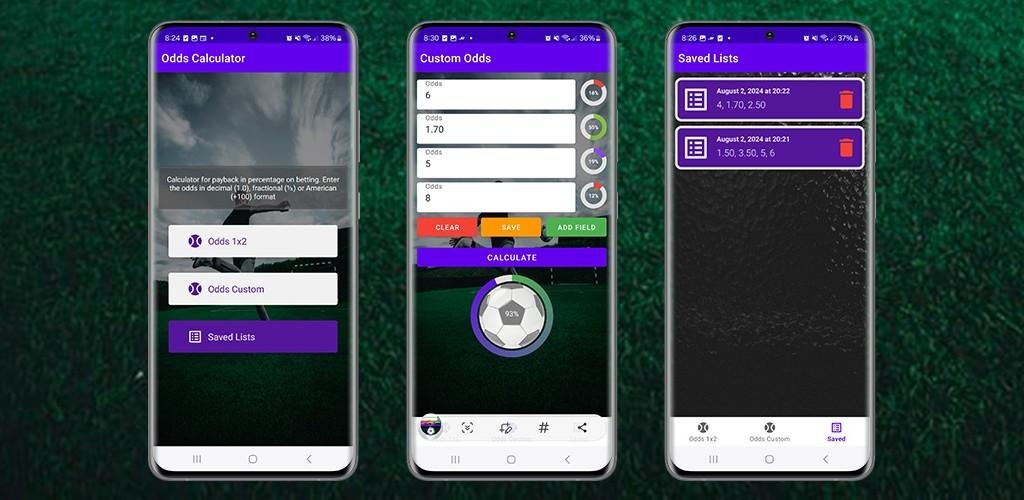
Before you place a bet, it pays to know exactly what you are getting into. A bet calculator betmentor lets you check your odds and payouts in advance, so you can see how much you could win, how much you could lose, and what the bet is really worth. It takes only a few seconds, and it turns a guess into a clear set of numbers you can trust.
Why Check Before You Bet?
A bet is a decision about money, and every money decision deserves a quick check first. When you check your odds and payouts before placing a bet, you learn three things: the most you can win, the most you can lose, and the conditions that have to be met for you to win. Without that check, you are betting on a feeling rather than on facts.
Checking first also protects you from simple errors. Odds can be misread, especially when you switch between fractional and decimal formats. A stake can be typed wrong. A multiple bet can include a selection you did not mean to add. A calculator catches these problems before money changes hands, when they are still free to fix.
Understanding the Odds on Your Slip
The first thing to check is the odds. Odds tell you how much you will be paid for every unit you stake, and they also hint at how likely the bookmaker thinks the selection is to win. Short odds mean a smaller payout and a selection the bookmaker rates highly. Long odds mean a bigger payout and a selection the bookmaker rates less highly.
Odds come in three formats. Fractional odds such as 5/2 are traditional in the UK and Ireland. Decimal odds such as 3.50 are common across Europe and on most betting sites. American odds such as +250 or -200 are used mainly in the United States. The format does not change the bet; it only changes how the price is written. A calculator accepts all three and converts between them, so you can enter the odds exactly as they appear on your slip.
How Payouts Are Calculated
A payout has two parts: your stake back, and your profit on top of it. The total return is the full amount you receive if the bet wins. The profit is the total return minus your stake. Both numbers matter, and confusing them is one of the most common mistakes in betting.
With decimal odds, the calculation is simple: multiply your stake by the decimal odds to get the total return. For example, a stake of 20 units at decimal odds of 3.50 returns 70 units in total, which is 50 units of profit plus your 20-unit stake back. With fractional odds of 5/2, the same stake gives the same result: 50 units of profit plus the stake.
A calculator performs this calculation instantly and shows the total return and the profit separately. That separation is the whole point of checking. You should know not just that you would get 70 units back, but that 50 of those units are profit and 20 are simply your own money coming back.
Checking a Single Bet
A single bet is the simplest bet to check. It covers one selection in one event, and it either wins or loses. Enter the odds and the stake, and the calculator shows the total return, the profit, and the amount you lose if the selection does not win — which is simply your stake.
Checking a Multiple Bet
A multiple bet, or accumulator, combines several selections into one bet, and the odds are multiplied together. The possible return is much larger than a single bet, but every selection must win for the full payout. Checking a multiple bet matters more, because the combined odds are harder to work out by hand.
Enter each selection’s odds and the stake, and the calculator will show the combined odds and the total return if all selections win. It will also show what you lose if any selection fails, which is your full stake. That is the trade-off at the heart of a multiple bet: a bigger possible return in exchange for a smaller chance of winning.
A Simple Pre-Bet Checklist
Before you place any bet, run through this short checklist with a calculator:
- Enter the odds exactly as shown on the slip, in the correct format.
- Enter the stake you actually intend to risk, not a round number you guessed.
- Check the total return and the profit separately, and make sure you know which is which.
- Check the total stake, especially for combination bets where the stake is multiplied.
- Look at what happens if the bet loses, and confirm you are comfortable losing that amount.
- For multiple and combination bets, look at the partial returns, not just the full return.
- If the result looks wrong, re-check the odds and the stake before anything else.
This checklist takes less than a minute, and it catches most of the mistakes that lead to unpleasant surprises.
Common Mistakes When Checking Odds and Payouts
- Reading fractional odds backwards, for example treating 2/5 as if it were 5/2.
- Mixing up total return and profit, and expecting to gain more than the bet actually pays.
- Forgetting that the stake on a combination bet is multiplied by the number of combinations.
- Assuming a multiple bet pays out in full if most selections win, when it needs all of them.
- Checking the odds but not the stake, or the stake but not the odds, and missing an error in the other number.
Final Thoughts
Checking your odds and payouts before you place a bet is a small habit with a big payoff. It takes seconds, it costs nothing, and it replaces guesswork with clear numbers. You will know what you could win, what you could lose, and what has to happen for you to win — before any money is at stake.