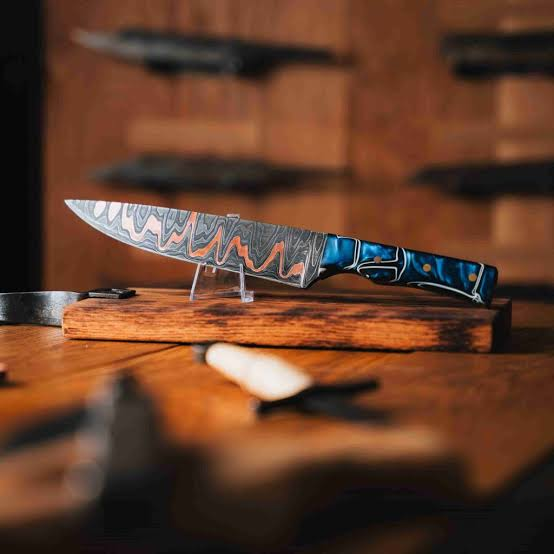

Some knife blades are crafted solely for cutting, while others captivate the eye before even touching a surface. Damascus knives fall into the latter category; they blend stunning patterns, traditional craftsmanship, and a unique character that makes every blade feel special. The flowing lines on the blade might resemble ocean waves, swirling plumes of smoke, or the growth rings hidden within an ancient tree trunk. Yet, their appeal extends beyond mere appearance. These knives bridge the practical function of a cutting tool with centuries-old metalworking traditions, creating a compelling balance between utility and visual beauty.
In a world filled with mass-produced goods, Damascus knives offer something distinct. The patterned steel lends a personal character to each blade, making it feel exceptional and unique. Whether for those who appreciate fine craftsmanship, collectors of unique blades, or enthusiasts of Western cowboy-style knives, this style blends history, design, and modern expectations in an unforgettable way.
Damascus Knives: When Steel Becomes Art
The first thing that usually draws people to a Damascus knife is its pattern. Unlike plain, highly polished blades, the surface features flowing lines that move across the steel. Depending on the forging method and finishing process, these patterns can resemble waves, staircases, twisting ribbons, or dramatic layers of contrasting metal.
This visual identity makes Damascus knives appealing even to laypeople with little knowledge of cutlery. The patterns invite observers to look closer and notice details that might go unnoticed on an ordinary surface. Two knife blades might share similar shapes and materials yet look vastly different because their internal patterns are arranged in distinct ways.
However, appearance alone does not determine quality. A beautiful pattern does not automatically guarantee superior sharpness, strength, or durability. Steel composition, heat treatment, the grinding process, and the final finish all play crucial roles in determining a blade’s performance. The most impressive Damascus knives are those that combine striking design with reliable construction, rather than relying solely on aesthetics to create value.
The Ancient Art Behind Modern Damascus Knives
The name “Damascus” is historically linked to legendary patterned blades. Traditional Damascus steel and the modern “pattern-welded” steel commonly used in today’s Damascus knives are not necessarily the exact same material or the product of identical manufacturing processes. Modern knifemakers often fuse various layers of steel through forging, manipulate those layers, and reveal the resulting patterns through meticulous finishing stages.
This process demands patience and expertise. The metals must be joined precisely, and the maker must control the forging and heat treatment processes to produce a functional blade. Small decisions can influence the final look; that is why experienced artisans often view pattern creation as a blend of technical discipline and artistic endeavor.
The result is a product that reflects far more than mere factory production. Damascus knives showcase the maker’s attention to symmetry, contrast, blade geometry, and handle design. Their appeal stems from the relationship between the material and the artisan who shapes it. That connection makes a beautifully crafted blade feel more special and memorable than a product chosen solely for its basic utility.
Cowboy Knives: Capturing the Spirit of the Wild West
While patterned steel draws the eye with its visual intricacy, cowboy knives possess a distinct character. Their designs are often inspired by ranch life, the history of the American West, outdoor work, and the rugged tools used by generations of cowboys. Traditional styling may feature sturdy handles, practical blade profiles, leather sheaths, and decorative details that evoke the atmosphere of the American frontier.
Blending these two design traditions can yield truly stunning results. A Damascus blade paired with a Western-style handle might incorporate natural wood, bone-like materials, textured surfaces, or classic metal accents. The flowing steel patterns offer dramatic visual appeal, while the cowboy influence lends the knife a unique identity.
For collectors, this combination can be highly appealing as it bridges two distinct narratives: the classic character of patterned steel and the enduring imagery of the American West. However, a Western-style knife need not feature a patterned blade to be impressive. The best choice ultimately depends on personal taste, intended use, and the quality of craftsmanship.
Why Damascus Knives Excel in a Competitive Market
Many competing products vie for attention through branding, packaging, and dramatic advertising. Damascus knives possess a distinct advantage: their appearance is intrinsic to the material itself. The blade serves as the primary draw, and its pattern remains visually captivating long after the initial excitement of the purchase has faded.
This makes design consistency crucial. A well-balanced blade, clean grind lines, a comfortable handle, and a meticulously finished surface combine to create an impression of quality. Conversely, if the handle feels awkward or the blade finish is uneven, even a beautiful pattern cannot mask these shortcomings.
Damascus knives also appeal to those who value items with unique character. Depending on the pattern and manufacturing method, the final appearance can vary from one blade to another. This variation gives the knife a distinctive, non-mass-produced feel—though buyers should still scrutinize the craftsmanship rather than assuming every patterned blade is inherently unique or handmade.
Another draw lies in design versatility. Makers can craft compact blades for everyday carry, designs for outdoor activities, decorative pieces for collectors, or Western-inspired models. The pattern serves as a design element adaptable to various styles, allowing for diversity rather than forcing every knife into the same visual category.
What Makes a Quality Damascus Blade Worth Appreciating?
A worthy knife blade must offer more than just stunning visuals. Steel quality and the heat treatment process determine edge retention, toughness, and corrosion resistance, while blade geometry dictates cutting performance. Construction quality is also crucial, especially if the knife is intended for regular use rather than mere display.
Reliable craftsmanship is evident in the details. The handle should feel solid and comfortable in the hand, the finish should be consistent, and the blade should be suited to its intended purpose. Buyers must also consider maintenance, as many high-carbon steels can rust if left wet or stored improperly. It is these details that distinguish true quality from mere marketing rhetoric. A Damascus knife may feature many layers of steel, but the layer count alone does not guarantee superiority. A knife meticulously crafted from the right steel using a proper heat treatment process can be a better choice than a product that looks more elaborate but suffers from questionable construction.
The same principle applies to anyone interested in cowboy-style knives or other traditional designs. While a strong visual identity has value, practical details and honest information about materials should always be the primary considerations when making a purchase.
Damascus Knives and the Growing Appreciation for Craftsmanship
Modern buyers frequently encounter products designed for quick replacement. In this context, meticulously crafted objects offer a distinct experience. Damascus knives encourage people to pay attention to materials, finishing, and the decisions that shape the final product. Their patterns naturally spark conversation, while the craftsmanship offers something more substantial to appreciate. For collectors, a knife might symbolize a specific maker, a particular design era, or a personal milestone. For outdoor enthusiasts, the appeal may lie in the blend of captivating style and practical construction. Others simply admire the artistry of the metalwork without intending to use the knife regularly.
The key distinction is that these purposes differ. A decorative collector’s knife is naturally evaluated differently than a working knife intended for outdoor activities. Clear product descriptions help buyers understand whether a design prioritizes aesthetics, everyday utility, or a balance between the two.
A Lasting Impression Beyond Mere Blade Sharpness
The lasting attraction of Damascus knives comes from the combination of material, craftsmanship, and visual identity. Their flowing patterns make them stand apart, but their real value depends on how well the entire knife has been designed and produced. When quality construction meets thoughtful styling, the result can be both practical and visually memorable.
From elegant patterned blades to rugged cowboy knives, traditional knife designs continue to attract people who appreciate objects with character. Damascus knives offer a particularly compelling expression of that interest, turning layered steel into a surface that feels almost alive. Their beauty may capture attention first, but careful craftsmanship is what gives that attention a lasting reason to stay.