
Cable bills keep going up every year and nobody really explains why. You call to ask and get some vague line about rising costs, meanwhile you’re watching the exact same channels that you always did. That’s a big reason so many households across the USA have started looking into an IPTV subscription instead and once you actually break the numbers down, it’s pretty easy to see why people are switching for good.
A lot of people just assume streaming sounds cheaper without knowing what’s actually behind that. So let’s go through where the money goes with cable versus where it goes with an IPTV service because the gap is bigger than most people think once you look past the surface.
Why Does Cable Cost So Much in the First Place?
Cable is built around bundling. You’re not paying for what you actually watch, you’re paying for hundreds of channels crammed together, most of which never even get turned on. That’s exactly why the bill stays high even for people who barely watch TV during the week.
On top of that, cable companies have to keep up a ton of physical stuff behind the scenes. Wires running through neighborhoods, satellite equipment, technicians driving around fixing outages. All that costs money and someone’s paying for it every month.
Equipment Rental Fees Nobody Really Notices
This one sneaks past a lot of people. Cable almost always comes with a box rental fee and if your house has more than one TV, that’s another box, another charge stacked right on top. Most people don’t realize how much of their bill is just equipment sitting in a cabinet.
With an IPTV subscription, there’s usually way less hardware involved. A lot of households just run an app on a device they already have which cuts out a chunk of the monthly cost that cable customers have gotten used to paying without ever questioning it.
Setup and Installation Charges
Getting cable installed rarely comes free. A technician shows up, connects a few things and somehow that twenty minute visit turns into a charge on your first bill. It’s just built into the whole system.
An IPTV service skips that part completely. Since it runs over the internet you already have, there’s no technician and no installation fee just to get started. Sign up and you’re usually watching within a few minutes.
Long Contracts and Cancellation Penalties
Cable loves locking people into long contracts, sometimes a year or more especially if you signed up during some promo deal. Try to cancel early and there’s almost always a fee waiting which feels backwards considering you’re the one who’s been paying them the whole time.
Most IPTV subscription plans run month to month instead. That means you’re not stuck if things aren’t working out and you’re not paying a penalty just for wanting to leave. That kind of flexibility changes how people think about the whole thing.
Random Fees That Show Up Out of Nowhere
Cable bills have this habit of creeping up over time even when nothing about your plan changed. Regional fees, random taxes, some vague service charge that shows up a few months later. Nobody explains it and people just accept it because it’s been happening for years.
An IPTV subscription usually stays a lot more predictable since the whole setup is simpler. Fewer moving parts means fewer surprise charges tacked onto your bill down the line.
Try Free Trial Before You Commit
Cable never really offers this. Most cable companies expect a signed contract before you even know if the service is any good. An IPTV free trial flips that around, letting you actually try the service before spending anything.
That kind of test run matters more than people think. You get to check the stream quality, see how the content’s organized and figure out if it fits your house before committing to anything long term. Cable never gives you that option and that alone tells you something about how confident each side is in their own service.
What You Actually Get for the Price?
Price is only half the story though. Even when the numbers look close, what you’re getting for that money is where things really separate. An IPTV service usually gives you way more control over what you watch and when, instead of your whole house working around one fixed schedule.
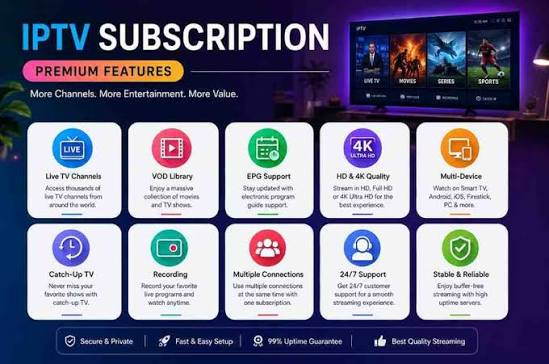
Multiple devices running different things at once, content that’s actually organized instead of just dumped together and flexibility that fits how your household actually lives day to day. Add all that up and the value leans pretty heavily toward IPTV even when the sticker price looks close to cable at first.
Bigger Households Feel the Difference Even More
Larger households notice this gap the most. More people means more devices, more shows everyone wants running, more chances that everybody’s watching something different at the same time. Cable makes that expensive fast since you’re often paying extra just to add another box or bump up your package.
An IPTV subscription plan handles that kind of household a lot better without piling on fees for every small thing. That’s a big reason families end up saving way more than expected once they sit down and actually compare their bills side by side.
Breaking It Down Before You Decide
If you’re thinking about leaving cable, take an honest look at your current bill instead of going off a gut feeling that streaming should be cheaper. Break it into pieces, the content itself, the equipment rental and any random fee buried somewhere that you might’ve missed.
Once it’s laid out like that, an IPTV subscription usually wins, not just on price but on everything wrapped into it. No equipment piling up, no random installation charge and no contract keeping you stuck somewhere you don’t want to be.
Parivaar IPTV is a good example of what this breakdown actually looks like in practice. With flexible monthly plans, a solid content library and HD and 4K quality across devices, households get real value without the extra fees that cable tends to pile on year after year.
For anyone across the USA who’s tired of watching their cable bill climb without any real explanation, this breakdown is basically the reason people are switching over for good.